Non-Comedogenic Moisturizer: How to Read the Label


Written by Luisa Slavila - Founder of Off We Glow
Updated on August 18th 2026
A non-comedogenic moisturizer is formulated to be less likely to clog pores, but the term does not guarantee that a product will never cause breakouts. There is no single required test behind every non-comedogenic claim, so the complete formula, ingredient concentrations, product testing, texture, and your own skin history matter more than the words printed on the front.
That was something I wish I had understood much earlier.
 Hydration
 Soothing
 Radiance
 Clarity
Key Highlights
-
“Non-comedogenic” means a product is intended to be less likely to clog pores, but it does not guarantee that you will never experience a breakout.
-
Comedogenic ratings assess individual ingredients, not necessarily the behavior of the finished formula.
-
An ingredient’s concentration, formulation, delivery system, and interaction with other ingredients can affect how your skin responds.
-
Look beyond the front label and review the full ingredient list, finished-product testing, texture, fragrance, and customer experiences.
-
The Glow Checker can help identify potentially pore-clogging ingredients, but your individual skin history still matters.
What Does Non-Comedogenic Actually Mean?
A non-comedogenic moisturizer is formulated to be less likely to clog pores, but the term does not guarantee that a product will never cause breakouts. There is no single required test behind every non-comedogenic claim, so the complete formula, ingredient concentrations, product testing, texture, and your own skin history matter more than the words printed on the front. That is what I look for now in a non-comedogenic moisturizer, and it is what we set out to build.
The Label I Used to Trust Too Much
For years, I treated the words “non-comedogenic” like a promise. If they appeared on the packaging, I assumed the product was automatically safe for my acne-prone skin.
Then I would try the moisturizer, notice small bumps appearing, and wonder what I had done wrong. Was I applying too much? Was I layering it incorrectly? Was my skin “purging”?
Sometimes I would stop moisturizing altogether because I became convinced that every cream would clog my pores. My skin would then feel tight and dehydrated, which created an entirely different problem.
Eventually, I realized I had been giving one marketing term far too much authority. The problem wasn’t that every moisturizer was bad for my skin. The problem was that I didn’t yet know how to evaluate the formula beyond the claim on the front.
Why “Non-Comedogenic” Is Not a Guarantee
In the United States, cosmetic products and most cosmetic claims are not individually pre-approved by the FDA before going to market. Companies remain responsible for making sure their products are safe and their labeling is truthful and not misleading [1].
However, there is no single universal non-comedogenic test that every brand is required to perform in exactly the same way. One company may assess individual ingredients. Another may rely on supplier information. Another may test the finished product.
This doesn’t mean the term is meaningless. It means you need to understand what the claim can and cannot tell you.
“Non-comedogenic” generally means that a product was formulated with the intention of reducing the likelihood of clogged pores. It does not mean:
-
The product cannot cause breakouts.
-
Every person with acne-prone skin will tolerate it.
-
Every ingredient has a comedogenic rating of zero.
-
The product cannot cause irritation.
-
The formula is automatically right for sensitive skin.
Your skin can react to a product for reasons that have nothing to do with comedogenicity. Fragrance, overuse, irritation, layering too many products, or sensitivity to a particular ingredient can all influence your experience.
The Comedogenic Rating Scale and Where It Falls Apart
You may have seen online ingredient lists that assign every skincare ingredient a comedogenic rating from 0 to 5. A rating of 0 is generally presented as unlikely to clog pores, while a rating of 5 is considered highly likely to do so.
It sounds wonderfully simple. Unfortunately, skin is not that simple.
Many early comedogenicity ratings came from tests performed on individual ingredients, sometimes at concentrations much higher than those used in a finished moisturizer. Some historical data also came from the rabbit ear model, which researchers have acknowledged can respond more strongly than human skin [3].
A rating usually does not tell you:
-
How much of the ingredient is in the product.
-
Whether the product is washed off or left on.
-
What other ingredients surround it.
-
How the formula was emulsified.
-
Whether the finished product was tested.
-
How your individual skin will respond.
That is why I don’t believe in treating comedogenic ratings as a universal blacklist. They are screening tools, not final answers.
Ingredients Most Often Flagged as Pore-Clogging
Some ingredients appear repeatedly on comedogenic ingredient lists. That does not automatically make them “bad,” but acne-prone skin may benefit from examining them in context.
| Ingredient | Why It Is Often Flagged | What to Keep in Mind |
|---|---|---|
| Isopropyl Myristate | Has historically received higher comedogenicity ratings | Concentration and the finished formula still matter |
| Coconut Oil | Can feel heavy or occlusive on some acne-prone facial skin | Many people tolerate it on the body but not on the face |
| Cocoa Butter | Rich texture may feel too heavy for some clog-prone skin types | It is not automatically problematic for everyone |
| Wheat Germ Oil | Frequently appears on traditional pore-clogging lists | Its position and concentration in the formula matter |
| Algae Extract | Some databases flag certain algae-derived ingredients | “Algae extract” describes a broad category, not one identical ingredient |
| Certain Fatty Alcohols | Sometimes appear on automated warning lists | Cetyl, stearyl, and cetearyl alcohol are not the same as drying alcohols and are often well tolerated |
Even ingredients historically used as positive controls in comedogenicity testing have not produced identical results across every human population or testing model. This is another reason not to judge an entire product by one ingredient alone.
Why the Formula Matters More Than the Ingredient List
An ingredient list can tell you what is in a moisturizer. It cannot tell you the complete story of how that moisturizer behaves on your skin.
The percentage of each ingredient matters. The delivery system matters. The texture matters. The ingredients surrounding it matter.
An ingredient used at a very low level to stabilize or improve a formula may behave differently from that same ingredient applied alone at a high concentration.
This is why two moisturizers containing several of the same ingredients can feel completely different. One may absorb quickly and sit comfortably under makeup. The other may feel heavy and leave your skin congested.
The ingredient list is important, but it should be interpreted as part of the finished formula, not as a collection of isolated villains.
What to Look for Instead of a Front-Label Claim
When I evaluate a moisturizer for acne-prone or reactive skin, I look beyond the word “non-comedogenic.”
1. A complete ingredient list
I want the full INCI list to be easy to find before I purchase the product. Transparency matters, especially when you already know that certain ingredients have caused problems for your skin.
2. The position of potentially concerning ingredients
Ingredients are generally listed in descending order of predominance, although ingredients present at 1% or less may appear in any order after those above 1%. If an ingredient you are cautious about appears near the end, that may provide useful context, but it does not reveal the exact percentage.
3. Finished-product testing
Testing an individual ingredient and testing the complete formula are not the same thing. When available, look for information about testing performed on the finished product, including human patch testing, irritation testing, or non-comedogenicity testing. These tests still cannot predict every individual experience, but they provide more meaningful information than a marketing claim alone.
4. The overall texture
If you are oily, acne-prone, or easily congested, you may prefer a lightweight moisturizer that absorbs comfortably rather than a very heavy or waxy formula. Texture is not proof of comedogenicity, but it can help you decide whether a product fits your routine and preferences.
5. Fragrance and potential irritants
A moisturizer can be non-comedogenic and still feel uncomfortable on sensitive skin. If your skin is also reactive, look at fragrance, essential oils, and the number of strong active ingredients included in the same formula. I wrote about how that played out on my own skin in serum for redness: what finally calmed my reactive skin.
6. Patterns in customer reviews
One negative review does not prove that a product is pore-clogging. Instead, look for patterns among people who describe skin similar to yours. Repeated comments about congestion, irritation, heaviness, or pilling may be more informative than one isolated experience.
Why I Built the Glow Checker
I built the Glow Checker because reading skincare labels can feel unnecessarily confusing.
People are often given two extreme options. Trust the marketing claim completely. Or become afraid of a long list of supposedly “bad” ingredients.
I didn’t think either approach was helpful.
The Glow Checker was created to give people a practical starting point. You can paste in a product’s ingredient list and check whether it contains ingredients commonly associated with clogged pores.
But it is not meant to diagnose your skin or declare that a product will definitely break you out. It gives you information. Your skin history gives that information context.
How to Check a Moisturizer You Already Own
Step 1: Find the complete ingredient list
Use the list printed on the packaging or the brand’s official website. Avoid relying on incomplete retailer listings when possible.
Step 2: Copy the ingredients exactly as written
Do not remove ingredients simply because you do not recognize them. Cosmetic ingredient names often sound intimidating even when they serve basic functions.
Step 3: Paste the list into the Glow Checker
The Glow Checker will help identify ingredients that are commonly flagged as potentially pore-clogging.
Step 4: Review the results in context
Do not panic if one ingredient is flagged. Check where it appears in the ingredient list, consider the texture of the product, and think about whether you have reacted to that ingredient before.
Step 5: Patch test and introduce it gradually
Test the product on a small area first. When adding it to your full routine, avoid introducing several new products at the same time. That way, if your skin reacts, you have a better chance of identifying what changed.
Stop using the product if you experience significant or persistent discomfort. If breakouts are painful, severe, or difficult to understand, speak with a dermatologist.
How We Approach Acne-Prone Skin at Off We Glow
When we develop a formula at Off We Glow, we don’t begin by asking how many trending ingredients we can fit inside it. We begin with the person who will use it.
-
Would this formula feel comfortable on sensitive skin?
-
Is every ingredient contributing something meaningful?
-
Does the texture work for someone who is acne-prone and afraid of heavy skincare?
-
Can the product fit into a simple routine?
We screen ingredients individually, but we also evaluate how they work together in the complete formula. We prefer lightweight, purposeful ingredients and avoid adding fragrance simply to make a product feel more luxurious.
During development, we were cautious about heavier options that could have made the formula feel richer or reduced formulation costs. An ingredient does not have to be universally “bad” for us to decide that it is wrong for the person we are formulating for. That distinction matters to me.
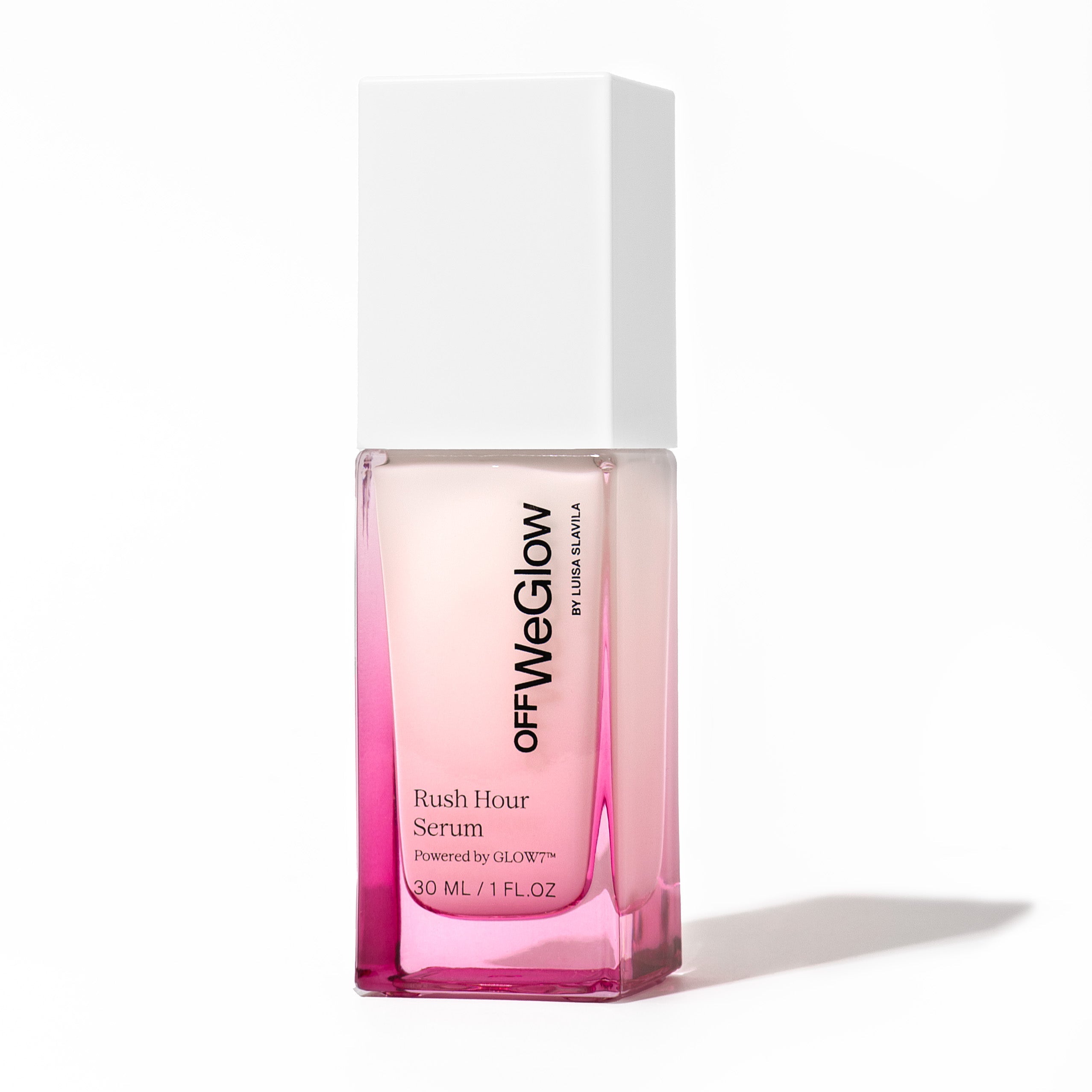
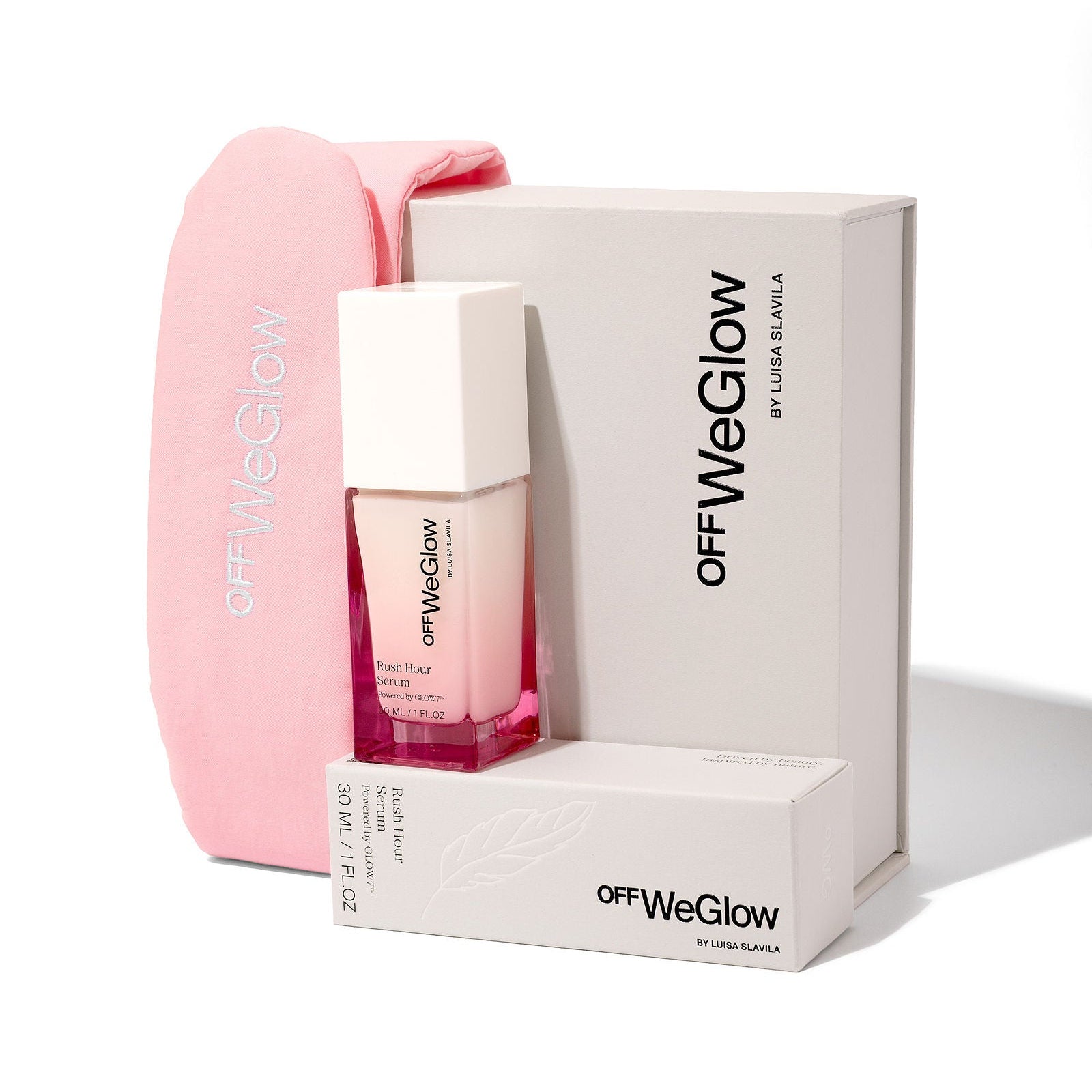
Rush Hour Serum was created as a lightweight, fragrance-free, non-comedogenic formula for sensitive and acne-prone skin. It also underwent HRIPT testing with 56 participants, with zero irritation observed. Results may vary.
HRIPT testing provides information about irritation and sensitization under the study conditions. It does not guarantee that no individual will ever experience a breakout.
That same honest, formula-first philosophy guides the way we think about every Off We Glow product.
Frequently Asked Questions
-
Does non-comedogenic mean a product won’t break me out?
No. Non-comedogenic means a product is intended to be less likely to clog pores. Your individual skin, the complete formula, irritation, product layering, and other factors can still influence whether you experience breakouts.
-
Is non-comedogenic a regulated term?
There is no single legally required definition or standardized test that every cosmetic brand must use for a non-comedogenic claim. Cosmetic claims must still be truthful and not misleading, but the evidence and testing behind the term can differ between brands.
-
What ingredients are most likely to clog pores?
Isopropyl myristate, coconut oil, cocoa butter, wheat germ oil, and some richer oils or esters are commonly flagged. However, regardless of the concentration and formulation, even the presence of one ingredient automatically makes the finished product comedogenic.
-
What is the best non-comedogenic moisturizer for acne-prone skin?
There is no single best moisturizer for everyone. Look for a lightweight texture, complete ingredient disclosure, minimal potential irritants, barrier-supportive ingredients, and finished-product testing where available. Our own face cream was developed with exactly those priorities in mind.
-
Can a non-comedogenic product still cause breakouts?
Yes. A product may feel too heavy for your skin, cause irritation, interact poorly with the rest of your routine, or contain an ingredient you personally do not tolerate.
-
How do I check whether a product is non-comedogenic?
Review the full ingredient list, use the Glow Checker to identify commonly flagged ingredients, consider their position in the formula, patch test, and introduce only one new product at a time.
My Final Thoughts
For years, I thought avoiding breakouts meant becoming afraid of moisturizers.
Now I understand that acne-prone skin still needs hydration and barrier support. The answer was never to avoid every cream or memorize a list of forbidden ingredients. It was to become more thoughtful about the complete formula.
That belief is one of the reasons I created Off We Glow and why I wanted the Glow Checker to be available to everyone.
I don’t want people to feel powerless when reading a skincare label. I want them to feel informed enough to ask better questions, recognize what their own skin needs, and choose products with more confidence.
Because skincare labels should help us understand our products. They should not ask us to trust one word blindly.
Did You Know?
Cosmetic ingredients sold in the United States are generally listed in descending order of predominance. However, ingredients present at concentrations of 1% or less may be listed in any order after the ingredients present above 1% [2].
This means the ingredient list can provide useful clues, but it cannot tell you the exact percentage of every ingredient. It is another reason why reading a label requires context, not fear.
Takeaway
“Non-comedogenic” is a useful starting point, but it should never be the only reason you trust a moisturizer.
Look at the complete ingredient list, the overall formula, its texture, finished-product testing, and patterns among people with skin similar to yours. Use the Glow Checker to identify ingredients worth examining, but remember that a flagged ingredient is not an automatic verdict.
The best moisturizer is not the one with the most reassuring words on the front. It is the one your skin can use consistently and comfortably.
About the Author
Luisa Slavila is the Founder of Off We Glow, an award-winning skincare brand created for sensitive, reactive, and acne-prone skin. After years of struggling to find products that felt both effective and gentle, she developed Off We Glow to simplify skincare with clinically tested, fragrance-free formulas designed to support the skin barrier and promote healthy-looking skin.
References
2. U.S. Food & Drug Administration. Cosmetic Labeling Guide
3. Fulton JE Jr. Comedogenicity and Irritancy of Commonly Used Ingredients in Skin Care Products — Journal of the Society of Cosmetic Chemists, 1989
4. Draelos ZD. Cosmetic Dermatology: Products and Procedures — Wiley-Blackwell, 3rd Edition, 2015
5. Kligman AM, Mills OH Jr. Acne Cosmetica — Archives of Dermatology, 1972
6. Elias PM. Skin Barrier Function — Journal of Investigative Dermatology, 2005
8. American Academy of Dermatology Association. Acne: Skin Care Tips