Vitamin C for Sensitive Skin: The Gentle Forms That Actually Work


Written by Luisa Slavila - Founder of Off We Glow
Updated on August 6th 2026
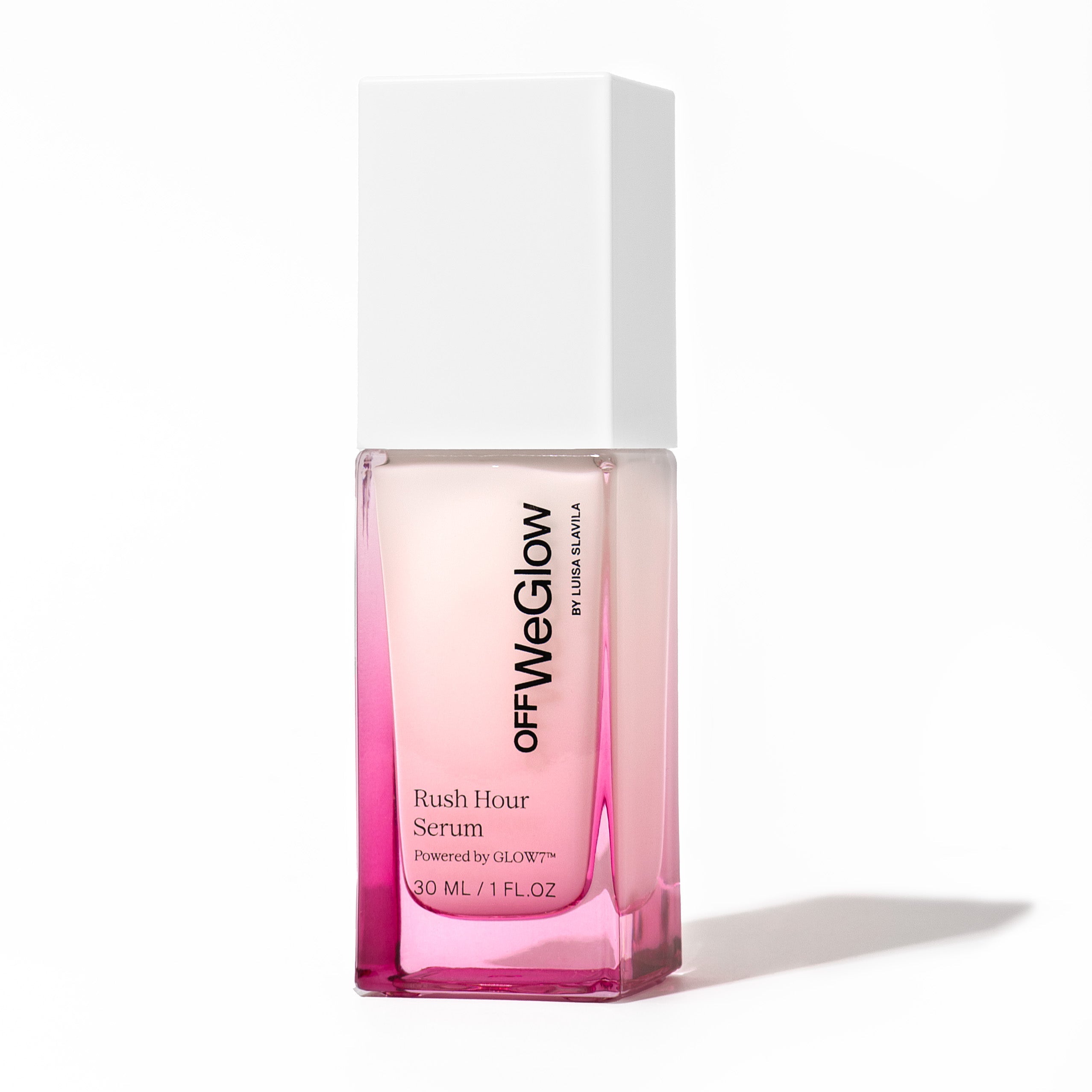
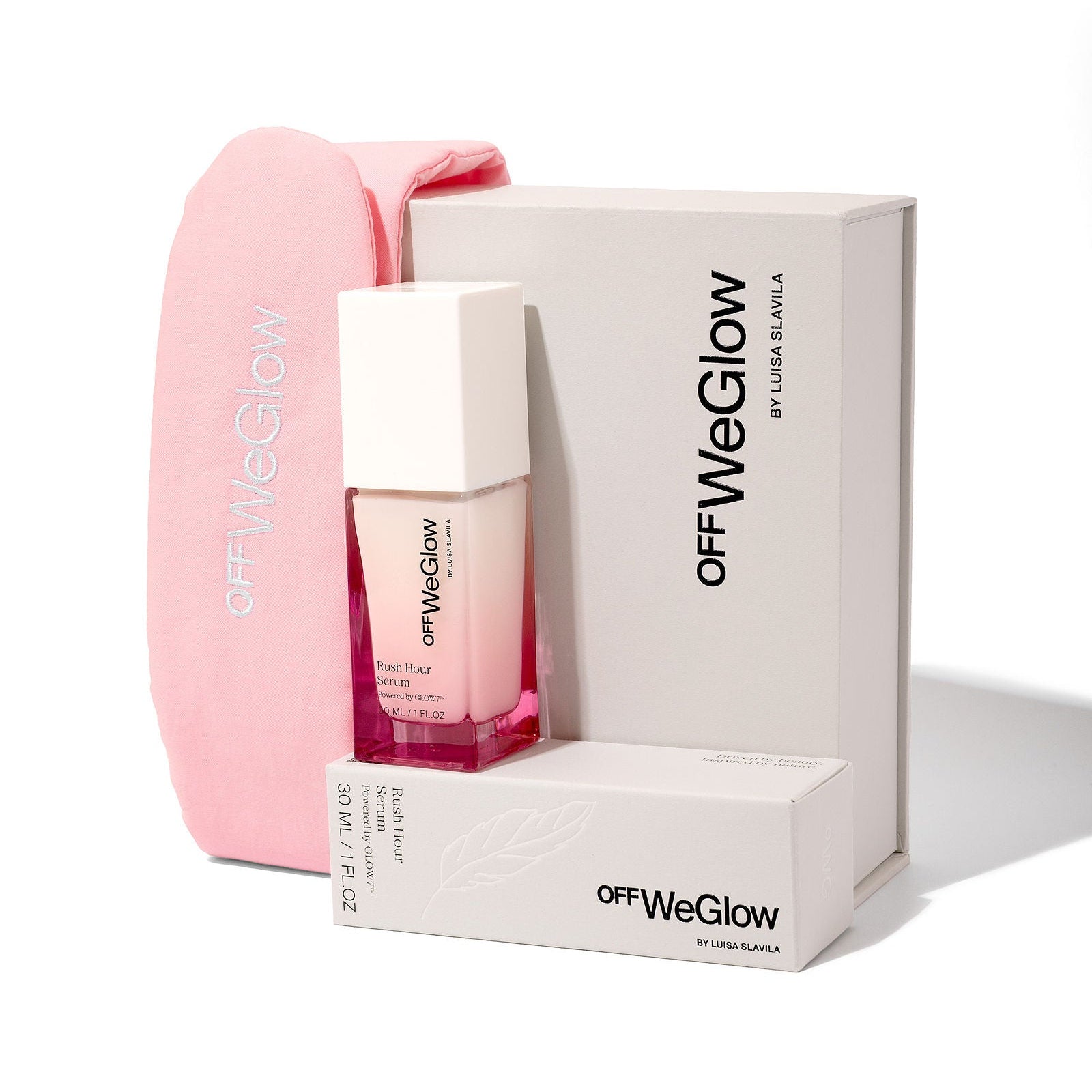
If you’ve ever tried a Vitamin C serum and your skin immediately started stinging, burning, or turning bright red, you’re not alone. The good news is that it usually isn’t Vitamin C itself causing the problem. More often, it’s the specific form of Vitamin C used in the formula. Once I understood that, everything changed, not only for my own skin, but also for the formulation of our Rush Hour Serum, which was created specifically for sensitive, reactive, and acne-prone skin.
 Hydration
 Soothing
 Radiance
 Clarity
Key Highlights
-
Most people who react to Vitamin C are reacting to one specific form of it, not to Vitamin C itself.
-
L-Ascorbic Acid generally needs a very low pH to stay effective, and that acidic environment is often what creates the stinging sensation.
-
Stable derivatives such as BV-OSC (Tetrahexyldecyl Ascorbate) tend to feel more comfortable on reactive skin while still offering antioxidant benefits.
-
If you’ve reacted before, it’s often worth trying again with a gentler form, patch testing first, and introducing it gradually rather than avoiding Vitamin C altogether.
I Thought Vitamin C Just Wasn’t For Me
For years I believed my skin simply couldn’t tolerate Vitamin C.
Every article told me Vitamin C was one of the best ingredients for brighter, healthier-looking skin. Dermatologists recommended it. Beauty editors loved it. Every skincare routine seemed incomplete without it.
So naturally, I kept trying.
Every time, the same thing happened.
Within minutes my face would start feeling warm.
Then tight.
Then that unmistakable sting would appear.
Sometimes my skin stayed red for hours afterwards.
I honestly thought that discomfort was simply the price you paid for results.
I even remember telling myself,
“Maybe this means it’s working.”
Looking back now, I wish someone had told me that isn’t necessarily true.
That experience became one of the biggest reasons I eventually created Off We Glow.
Because if an ingredient is supposed to help your skin look healthier, why should it make sensitive skin feel worse?
The Biggest Myth About Vitamin C
One of the biggest misconceptions I still see today is that sensitive skin simply cannot use Vitamin C.
I don’t believe that’s true.
The real question isn’t:
Can sensitive skin use Vitamin C?
The better question is:
Which form of Vitamin C are you using?
That difference matters far more than most people realize.
Why Some Vitamin C Serums Sting
When people talk about Vitamin C serums, they’re usually referring to L-Ascorbic Acid.
It’s probably the most famous form of Vitamin C.
It’s also the one that many people with reactive skin struggle with.
For L-Ascorbic Acid to remain effective, it generally needs to be formulated at a very low pH.
That acidic environment is often what creates the burning or stinging sensation many people experience.
Sensitive skin doesn’t necessarily dislike Vitamin C.
It often dislikes the environment required for that particular version of Vitamin C to work.
Once I understood that distinction, it completely changed how I looked at formulation.
Not All Vitamin C Is Created Equal
When we were developing Rush Hour Serum, we spent an incredible amount of time researching different Vitamin C derivatives.
Some were powerful but unstable.
Some oxidized quickly.
Others were simply too harsh for the type of customer I wanted to serve.
Eventually, our team chose BV-OSC (Tetrahexyldecyl Ascorbate).
Why?
Because it offered exactly what I had been searching for:
-
a gentler experience
-
excellent stability
-
compatibility with sensitive skin
-
easy layering with other ingredients
For me, choosing the right Vitamin C wasn’t about following trends.
It was about creating something I personally wanted to use every morning.
A Simple Comparison

| Form | Good for Sensitive Skin? | Stability | Typical Feel |
|---|---|---|---|
| L-Ascorbic Acid | Sometimes irritating | Lower | Can sting |
| Sodium Ascorbyl Phosphate | Gentler | Good | Lightweight |
| Magnesium Ascorbyl Phosphate | Gentle | Good | Comfortable |
| BV-OSC (Tetrahexyldecyl Ascorbate) | Excellent option for many sensitive skin types | Excellent | Very comfortable |
There isn’t one universally “best” Vitamin C.
There is only the best one for your skin.
What I Look For Before Buying Any Vitamin C Serum
Even today, after creating my own skincare brand, I still check five things before I buy any Vitamin C product.
1. Which form of Vitamin C is inside?
Most people never look beyond “Vitamin C” on the front label.
The ingredient list tells a much more complete story. If you’re not sure what’s hiding in a formula, our free Glow Checker lets you scan an ingredient list before you buy.
2. Is it heavily fragranced?
For my own skin, fragrance has rarely made things better.
If my goal is to support my skin barrier, I prefer keeping potential irritants to a minimum.
3. Is the packaging protecting the formula?
Vitamin C can become unstable when exposed to air and light.
Good packaging matters more than people think.
4. Does the formula support the skin barrier?
I don’t want one “hero ingredient.”
I want ingredients that work together.
That’s why I love pairing Vitamin C with ingredients like Niacinamide and barrier-supporting hydrators. If you want to understand what barrier support actually means, I break it down in What Is a Barrier Repair Serum?
5. Does it fit into a simple routine?
One of my biggest skincare lessons has been this:
More products don’t necessarily create better skin.
Consistency usually wins.
Why We Didn’t Choose L-Ascorbic Acid
People sometimes ask why we didn’t simply use the “gold standard.”
The answer is simple.
Because I wasn’t trying to build a product for ingredient enthusiasts.
I was trying to build one for people whose skin reacts to everything.
During development we went through numerous formula revisions before we felt confident we’d found the balance we wanted.
For me, comfort mattered just as much as performance.
If someone dreads applying their skincare because it hurts, they’re never going to stay consistent.
And consistency is where real long-term improvements usually happen.
If You’ve Reacted to Vitamin C Before
Don’t assume you’ll never be able to use it again.
Instead:
-
Start with a gentler derivative.
-
Patch test before applying to your whole face.
-
Introduce it gradually.
-
Keep the rest of your routine simple.
-
Focus on supporting your skin barrier.
Sometimes it isn’t the ingredient you need to avoid.
It’s simply the formulation.
If your skin also struggles with visible redness, I share what finally helped me in Serum for Redness: What Finally Calmed My Reactive Skin.
What I Learned Building Off We Glow
Creating Rush Hour Serum taught me something I wish I’d known years earlier.
Sensitive skin doesn’t need stronger products.
It needs smarter ones.
I stopped chasing ingredients that looked impressive on paper and started asking a different question:
“Would my own skin actually enjoy using this every day?”
That question shaped every formulation decision we made.
Today, Rush Hour Serum combines BV-OSC with Niacinamide and multiple barrier-supporting ingredients in a lightweight, fragrance-free formula designed for sensitive, reactive and acne-prone skin.
It isn’t meant to replace a thoughtful skincare routine.
It’s simply the type of Vitamin C serum I wish I had discovered years ago.
Choosing the right moisturizer is just as important as choosing the right serum. I explain what I look for in my guide to Non-Comedogenic Moisturizer: How to Read the Label Before It Breaks You Out.
Frequently Asked Questions
-
Is Vitamin C serum good for sensitive skin?
Yes. Many people with sensitive skin can use Vitamin C successfully, but the specific form and formulation make a significant difference.
-
What is the gentlest form of Vitamin C?
Many people with sensitive skin find stabilized Vitamin C derivatives, such as BV-OSC (Tetrahexyldecyl Ascorbate), more comfortable than traditional L-Ascorbic Acid.
-
Does Vitamin C serum cause purging?
Vitamin C itself is not typically associated with purging. If your skin becomes irritated, it may be reacting to the formulation rather than “purging.”
-
Can I use Vitamin C with Niacinamide?
Yes. These ingredients are commonly formulated together and can complement each other well in a skincare routine.
-
Can reactive skin still use Vitamin C?
Often, yes. Starting with a gentle, stable form and introducing it gradually may help improve tolerance.
My Thoughts
For a long time, I thought effective skincare was supposed to feel intense.
If a product tingled, stung, or made my face turn red, I assumed that meant it was powerful. Now I understand that discomfort is not proof that a product is working and sensitive skin should not have to suffer in pursuit of results.
That realization influenced every decision we made while creating Rush Hour Serum. I didn’t want to choose a form of Vitamin C simply because it was the most recognizable or because it sounded impressive on a label. I wanted one that I could genuinely look forward to applying every day.
For me, good skincare is not about using the strongest possible ingredient. It is about finding the right form, within the right formula, for your skin.
Vitamin C was never the problem. I simply hadn’t found the version that worked for me yet.
Did You Know?
BV-OSC (Tetrahexyldecyl Ascorbate) is an oil-soluble form of Vitamin C known for its stability and compatibility with sensitive skin. Unlike some traditional Vitamin C forms that require a low pH to remain effective, stable derivatives can provide antioxidant benefits while offering a more comfortable experience for many people with reactive skin.
Takeaway
If you’ve avoided Vitamin C because previous products irritated your skin, it may not have been Vitamin C itself that caused the reaction. The specific form, formulation, and overall product design play a significant role in how your skin responds. Choosing a stable, gentle Vitamin C derivative and introducing it gradually can help many people with sensitive skin enjoy the benefits of Vitamin C without unnecessary irritation. Results may vary.
About the Author
Luisa Slavila is the Founder of Off We Glow, a skincare brand created for sensitive, reactive, and acne-prone skin and a winner of a SheFinds 2026 Beauty Award. After years of struggling to find products that felt both effective and gentle, she developed Off We Glow to simplify skincare with clinically tested, fragrance-free formulas designed to support the skin barrier and promote healthy-looking skin.

Use code GLOW15 for 15% off