Red Marks vs Dark Marks After Acne: How to Tell Them Apart


Written by Dr Shamsa Kanwal - Dermatologist
Updated on August 18th 2026
Gently press the flat mark with a clean fingertip while standing in good natural light. If the color briefly becomes lighter and then returns, the mark may have a vascular component consistent with post-inflammatory erythema (PIE). If the color remains unchanged, pigment may be contributing, which is more consistent with post-inflammatory hyperpigmentation (PIH). If the area is indented, raised, or persistently uneven in texture, it may be a true acne scar rather than simply a change in skin color.
Although red marks, dark marks, and acne scars can look similar at first glance, they develop through different biological processes and do not always respond to the same approaches. Understanding what you are actually seeing is an important first step.
In this article, we will explain how to tell these post-acne changes apart, why treating the wrong type of mark can lead to months of frustration, and what may actually help each one so you can make more informed decisions about your skincare routine.
 Hydration
 Soothing
 Radiance
 Clarity
Key Highlights
-
Red marks after acne are usually linked to vascular changes, while dark marks develop from increased melanin production after inflammation.
-
A simple five-second press test can provide a useful clue about whether a flat acne mark has a vascular or pigment-related component.
-
Flat changes in color are usually post-acne marks, while persistent indentations, raised areas, or uneven texture are more suggestive of true acne scars.
-
Sun protection, controlling active acne, avoiding over-exfoliation, and choosing treatments that match the type of mark can support gradual improvement.
The Three Things Acne Leaves Behind
Getting a breakout under control can feel like a relief, but sometimes your skin still does not look the way you expected. The pimple may be gone, yet a reminder remains in its place. You might notice a flat red patch, a brown or gray spot, or a change in texture that makes the area look and feel different from the surrounding skin.
It is common to call all of these changes “acne scars,” but medically, they are not the same thing. Acne can leave behind three main types of visible changes: red marks, dark marks, and true scars [1]. Red marks and dark marks mainly involve changes in skin color, while true acne scars involve a structural change in the skin. Recognising the difference matters because each develops for a different reason and may require a different approach.
This distinction can be especially important if your acne marks have shown little improvement despite months of consistent skincare. The problem may not be that you have not tried hard enough. You may simply have been targeting pigmentation when the mark is mainly vascular, or treating a flat color change as though it were a true scar.
The Five-Second Press Test: A Helpful Clue, Not a Diagnosis
Before adding another brightening serum, exfoliant, or treatment to your routine, take a closer look at what your skin is actually showing you. Wash your hands, stand somewhere with good natural lighting, and gently press a flat acne mark with your fingertip. A clear glass surface can also be used to observe the color change more closely.
Dermatologists use a related examination technique called diascopy. The principle is straightforward: gentle pressure temporarily reduces blood within superficial vessels, which can provide a clue as to whether the visible color has a vascular component or is more likely related to pigment.
Here is what different results may suggest.
If the Mark Fades Under Pressure and Then Returns
If a red or pink mark temporarily becomes lighter when you press it and the color returns after you release the pressure, this may suggest a vascular component consistent with PIE.
The temporary fading occurs because gentle pressure reduces blood within superficial vessels in the area. Once the pressure is removed, blood flow returns and the color becomes visible again. This is one reason red marks after acne can behave differently from dark spots caused mainly by excess pigment.
If the Color Does Not Change With Pressure
If the color remains essentially unchanged when you press the mark, pigment may be contributing to its appearance. This finding is more consistent with PIH, although the press test alone cannot confirm the diagnosis.
Unlike vascular redness, pigment does not temporarily disappear with pressure. Melanin responsible for PIH is present within the skin, so pressing on the area does not push the color away in the same way that it can with superficial blood vessels.
If the Area Feels Raised, Indented, or Uneven
If the area is persistently indented, raised, or noticeably different in texture from the surrounding skin, you may be looking at a true acne scar rather than PIE or PIH.
This is an important distinction when comparing acne marks vs acne scars. PIE and PIH are usually flat changes in color, while acne scars involve structural changes within the skin, often related to altered collagen formation during healing. Because of this structural difference, true scars may require approaches that are very different from those used for red or dark post-acne marks.
Dermatologist Note: The press test is a useful observational clue, but it is not a medical diagnosis. Some post-acne marks contain both vascular redness and excess pigment, so a mark may not fit neatly into either PIE or PIH. Skin tone, lighting, and the depth of the color can also affect what you see. The test cannot rule out other causes of redness, pigmentation, or skin changes. If a mark is changing, spreading, becoming symptomatic, or you are unsure what you are seeing, a dermatologist can provide a more accurate assessment.
What Red Marks After Acne Really Mean
PIE, sometimes called post-acne erythema, is a persistent change in skin color linked to inflammation-related vascular changes [2]. After an inflamed breakout settles, increased blood flow and more visible superficial blood vessels can leave behind a pink, red, or purple mark that remains even though the original acne lesion has healed [3].
Unlike dark marks, PIE is primarily a vascular concern rather than a problem caused by excess pigment. This distinction matters because brightening ingredients designed mainly to target pigmentation may not directly address the vascular component responsible for the redness. Repeated irritation can also keep the skin looking red for longer, which is why a gentle routine and prevention of new inflammation are important while the skin recovers.
PIE is often easier to recognise in lighter skin tones because redness creates a more noticeable contrast with the surrounding skin. However, PIE can occur in all skin tones. In deeper skin tones, redness may appear more purple, dusky, or less obvious, and vascular changes can sometimes exist alongside PIH. This means a single acne mark may contain both redness and excess pigment rather than fitting neatly into one category.
What Dark Marks After Acne Really Mean
Dark marks that remain after a breakout are known as PIH. Unlike PIE, which is primarily associated with vascular changes, PIH develops because inflammation affects pigment production within the skin [4]. When acne triggers inflammation, it can stimulate melanocytes, the cells responsible for producing melanin. These cells may respond by producing or distributing more pigment, leaving a flat brown, gray-brown, or darker area after the breakout itself has healed.
PIH is particularly important to recognize because skin tone can influence both how easily these marks develop and how long they remain visible. It is more common, often more noticeable, and may be more persistent in deeper skin tones because melanocytes can respond more strongly to inflammation [5]. Even a relatively small breakout can sometimes leave a dark mark that lasts much longer than the original pimple.
This is also why skincare advice for post-acne marks should not take a one-size-fits-all approach. People with richly pigmented skin may be especially prone to lingering PIH, while some individuals may experience both pigmentation and vascular redness in the same area. Identifying what is contributing to the color can help you choose a more appropriate skincare strategy and avoid repeatedly using products that do not match the concern.
Red Marks vs Dark Marks After Acne: Key Differences at a Glance
The table below compares the two main types of flat post-acne marks, including what causes them, how they may respond to gentle pressure, who is more likely to notice them, and which approaches may help.
| Red Marks After Acne (PIE) | Dark Marks After Acne (PIH) | |
|---|---|---|
| What it is | A vascular color change associated with lingering inflammation-related changes in superficial blood vessels. The visible color comes mainly from blood vessels rather than excess pigment. | A pigment-related color change caused by increased melanin production and transfer after inflammation. The visible color comes from excess pigment within the skin. |
| How it behaves under pressure | May temporarily become lighter when gentle pressure is applied because blood is displaced from superficial vessels. The color usually returns after the pressure is released. | Usually remains relatively unchanged with pressure because pressing the skin does not remove or temporarily displace melanin. |
| Who tends to notice it | Often easier to recognise in lighter skin tones because pink or red color creates greater contrast, although PIE can occur across all skin tones. | More common and often more persistent in deeper skin tones, where inflammation may trigger a stronger pigment response and longer-lasting discoloration. |
| What may help | Time, preventing new breakouts, avoiding repeated irritation, and supporting the skin barrier. Persistent redness may benefit from dermatologist-led vascular or light-based treatments. | Consistent sun protection, preventing new inflammation, and well-tolerated pigment-supportive skincare ingredients. Persistent PIH may require a more targeted dermatologist-guided approach. |
Why Treating the Wrong Acne Mark Can Stall Progress
One of the most frustrating parts of dealing with acne marks is spending weeks or months following a consistent skincare routine without seeing the improvement you expected. You may have tried brightening serums, exfoliants, or increasingly strong active ingredients, only to find that the mark looks almost unchanged.
The real issue may be that the treatment does not match the type of post-acne mark you have. A product that is helpful for dark spots may offer little benefit for persistent red marks, while aggressive attempts to fade either type can irritate the skin and make discoloration or redness more noticeable.
This is where over-treatment becomes a common problem. Layering multiple acids, frequently switching products, or exfoliating too often can disrupt the skin barrier and create additional irritation. If new breakouts seem to appear after introducing a product, checking its ingredients with our pore-clogging ingredients checker can also help you identify whether your routine may be contributing to ongoing congestion. Instead of speeding up improvement, this may make your skin more reactive and prolong the recovery process.
The goal is not to treat every acne mark with the strongest products available. It is to choose an approach that matches what your skin actually needs, use it consistently, and avoid unnecessary irritation. Once you know whether you are dealing mainly with red marks, dark marks, or both, the next steps become much clearer.
What Actually Helps Red and Dark Acne Marks?
Once you have a clearer idea of whether you are dealing with PIE, PIH, or both, the next step is to match your skincare strategy to what is happening within the skin. Some principles, particularly controlling active acne and avoiding unnecessary irritation, are important for both types of post-acne marks.
First, Prevent New Acne Marks From Forming
Before focusing heavily on existing red or dark marks, it is important to control ongoing breakouts. Every new inflamed acne lesion can create another opportunity for PIE, PIH, or true acne scarring to develop.
A gentle, consistent acne routine can help reduce repeated inflammation and limit the formation of new marks. If your acne is persistent, painful, nodular, or causing scars, a dermatologist can help you address the acne itself rather than simply treating what it leaves behind. Acne that is unusually itchy or does not behave like typical acne should also be assessed, as another skin condition may sometimes be contributing.
For Dark Marks: Post-Inflammatory Hyperpigmentation
If your post-acne marks are primarily caused by excess pigment, the goal is to prevent further pigment stimulation while gradually supporting a more even-looking complexion.
Make Daily Sun Protection a Priority
Sun protection is one of the most important steps for PIH. UV exposure can stimulate melanin production and make existing dark marks appear darker or remain visible for longer.
Use a broad-spectrum sunscreen with SPF 30 or higher every day. If you are particularly prone to persistent hyperpigmentation, a tinted sunscreen containing Iron Oxides may provide additional protection against visible light, which can also contribute to pigmentation [6]. Reapply sunscreen during prolonged outdoor exposure and after swimming, heavy sweating, or towel drying.
Support a More Even Skin Tone
Well-tolerated ingredients that target uneven pigmentation may gradually improve the appearance of PIH. These can include Vitamin C derivatives, Niacinamide, and other pigment-supportive ingredients that fit comfortably into your routine.
More is not necessarily better when treating dark marks. Using several strong products at the same time can increase irritation, and new inflammation may contribute to further pigmentation. A consistent routine that your skin tolerates is usually more useful than repeatedly switching to stronger formulas.
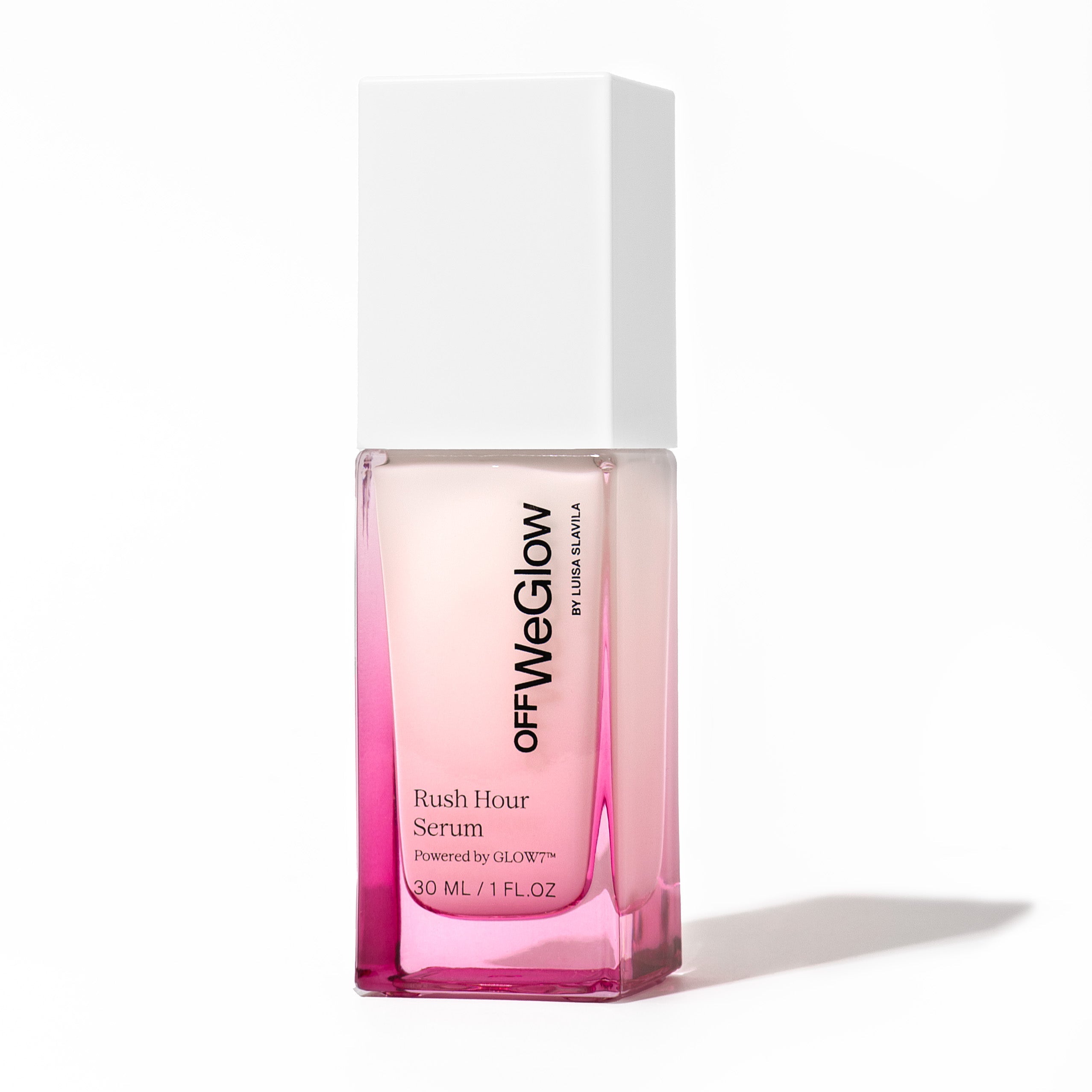
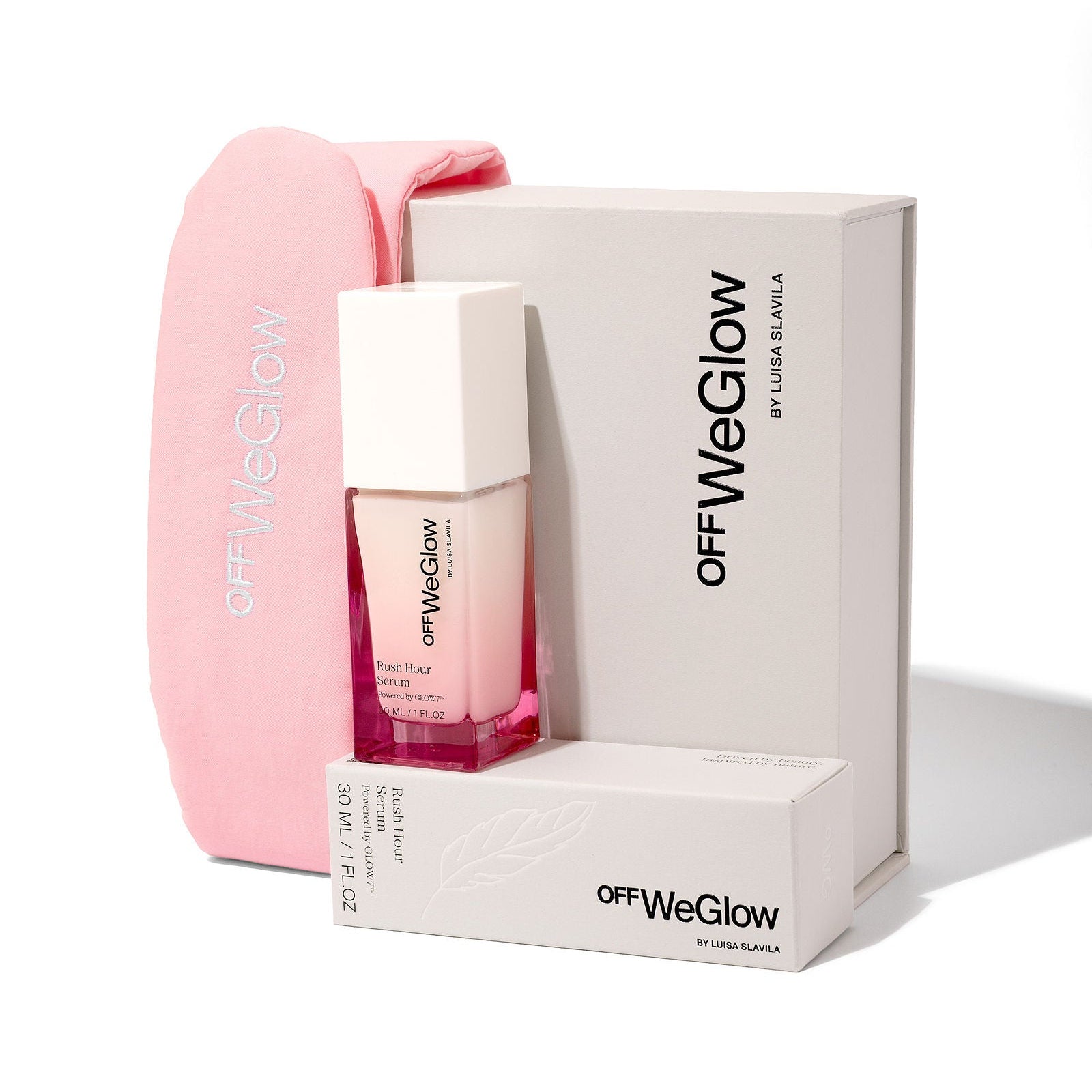
For example, Off We Glow’s Rush Hour Serum contains BV-OSC, a stable, non-acidic form of Vitamin C, alongside barrier-supportive and calming ingredients. It can help reduce the appearance of uneven tone while supporting a more comfortable, balanced-looking complexion. Results may vary.
For Red Marks: Post-Inflammatory Erythema
PIE can be more challenging to manage with topical skincare because fewer topical ingredients directly address its vascular component. The focus is therefore often on reducing further irritation, supporting skin recovery, preventing new inflammation, and considering professional treatments when redness remains persistent.
Avoid Repeated Irritation
Every new episode of irritation can make already reactive skin look redder and may interfere with the recovery process. Over-exfoliating, layering several strong active ingredients, or frequently changing products can make it harder for irritated skin to settle.
If you are trying to improve red marks after acne, a simpler routine is often the better approach. Choose gentle, well-tolerated products and introduce new active ingredients gradually rather than trying to speed up recovery by using several treatments at once.
Support a Comfortable, Resilient Skin Barrier
The skin barrier does not directly remove vascular redness, but keeping it healthy can make an important difference in how your skin feels and responds to skincare. A compromised barrier can increase dryness, stinging, and visible irritation, making post-acne redness appear more noticeable.
Gentle cleansing, appropriate moisturization, and avoiding unnecessary irritation can help create a more supportive environment while the skin recovers. Barrier-supportive ingredients can also improve tolerance to other products in your routine.
Consider Dermatologist-Led Treatments for Persistent Redness
If post-acne redness remains noticeable despite time and a gentle skincare routine, dermatologist-led treatments may be worth considering. Vascular lasers and carefully selected light-based treatments can target blood vessels contributing to persistent redness.
Options such as Pulsed Dye Laser may help improve PIE in appropriate patients, but the best treatment depends on several factors, including your skin tone, the extent and depth of redness, whether active acne is still present, and your tendency to develop post-inflammatory pigmentation. More than one treatment session may be required, and professional assessment is important before choosing a procedure.
Give Your Skin Time to Recover
Using stronger acids or exfoliating too frequently in an effort to fade red acne marks can compromise the skin barrier and increase irritation. A gentle, consistent skincare routine allows the skin to recover naturally while helping minimize inflammation and reduce the likelihood of developing additional post-acne marks.
What Can Make Acne Marks Last Longer?
Even after a breakout has healed, what happens next can influence how noticeable the leftover mark becomes and how long it remains. Some everyday habits can trigger additional inflammation, stimulate pigment production, or make already irritated skin more reactive.
-
Picking or squeezing. Adds new inflammation to skin that is already healing and raises the risk of a longer-lasting mark or a true scar.
-
Skipping daily sun protection. UV exposure can stimulate melanin production and make dark marks appear deeper or stay visible for longer.
-
Over-exfoliating. Frequent acids or scrubs can disrupt the barrier, increase irritation, and prolong redness rather than fading it.
-
Uncontrolled active acne. Each new inflamed lesion creates another opportunity for a fresh mark to form in the same area.
-
Constantly switching products. Introducing several new formulas at once makes it harder to identify what is helping and what is causing irritation.
-
Layering too many strong actives. Combining multiple acids or high-strength treatments often increases reactivity instead of speeding up recovery.
When Should You See a Dermatologist for Acne Marks?
Many red and dark marks after acne gradually become less noticeable with time, especially when new breakouts are controlled and the skin is protected from further irritation. However, not every mark should simply be left to fade on its own.
Consider seeing a dermatologist if:
-
A red or dark mark has shown little or no improvement after many months.
-
The area is becoming larger, changing in appearance, or looks different from your usual acne marks.
-
You have raised, indented, or otherwise textured acne scars.
-
You continue to develop frequent or inflamed acne that is creating new marks.
-
Your skin has become increasingly red, sensitive, or irritated after trying multiple skincare products.
FAQs About Red and Dark Acne Marks
Here are a few of the most commonly asked questions about red and dark acne marks:
-
What is the difference between Post-Inflammatory Erythema and Hyperpigmentation?
Post-inflammatory erythema is primarily associated with vascular changes that leave flat pink, red, or purple marks after acne. Post-inflammatory hyperpigmentation develops when inflammation stimulates excess melanin, leaving brown, gray-brown, or darker areas. Some post-acne marks can contain both vascular redness and pigment, so the distinction is not always completely clear.
-
Why are my acne marks red instead of brown?
Red acne marks are often associated with post-inflammatory erythema, where the remaining color is primarily related to superficial blood vessels rather than excess pigment. They may look pink, red, or purple depending on your skin tone and the severity of the original inflammation.
A gentle press test can offer a useful clue. If the mark temporarily becomes lighter under pressure and the color returns afterward, it may have a vascular component. However, this test is not a medical diagnosis, and some marks contain both redness and pigmentation.
-
How long do red marks from acne take to fade?
There is no exact timeline because post-inflammatory erythema can behave differently from person to person. Many red acne marks gradually become less noticeable over several months, while some can remain visible for a year or longer.
How quickly they improve can depend on the severity of the original breakout, repeated inflammation, skin sensitivity, picking, and whether new acne continues to develop. Avoiding unnecessary irritation and maintaining a consistent skincare routine can support the skin while it recovers.
-
Are acne marks the same as acne scars?
No. Acne marks usually refer to flat changes in skin color, including redness from post-inflammatory erythema or pigmentation from post-inflammatory hyperpigmentation. Acne scars involve structural changes within the skin and may appear indented, raised, or uneven.
A useful rule of thumb is that a flat area of discoloration is more likely to be a post-acne mark, while a persistent change in texture may indicate true scarring. A dermatologist can confirm the difference when it is difficult to tell at home.
-
Does sunscreen help acne marks fade faster?
Sunscreen is particularly important for dark marks because UV exposure can stimulate melanin production and make post-inflammatory hyperpigmentation appear darker or remain visible for longer. Daily broad-spectrum sun protection helps reduce additional pigment stimulation while the skin gradually recovers.
For people who are especially prone to persistent pigmentation, tinted sunscreens containing Iron Oxides may also provide protection against visible light. Sunscreen will not erase an existing mark overnight, but consistent protection can help prevent it from becoming more noticeable.
Did You Know?
Red acne marks can sometimes look more noticeable after exercise, a hot shower, or spending time in a warm environment. Heat and physical activity increase blood flow near the skin’s surface, which can temporarily make vascular redness appear stronger. Once your skin cools down, the color may become less noticeable again. This fluctuation is another clue that redness can behave differently from pigment-based dark marks.
Takeaways
Red marks, dark marks, and true acne scars may all appear after a breakout, but they are not interchangeable. Post-inflammatory erythema is primarily linked to vascular changes, while post-inflammatory hyperpigmentation involves excess pigment, and acne scars represent structural changes within the skin.
Once you understand which type of post-acne change you are dealing with, your skincare routine becomes much easier to focus. Protect dark marks from further pigment stimulation, avoid unnecessary irritation when redness is lingering, keep active acne under control, and give your skin enough time to recover.
If a mark remains unchanged for many months, becomes raised or indented, or continues to concern you despite consistent skincare, a dermatologist can identify what is actually happening and recommend an approach suited to your skin rather than treating every acne mark the same way.
References
1. A Brief Review on Acne Vulgaris: Pathogenesis, Diagnosis and Treatment — ResearchGate
2. Acta Dermato-Venereologica — Medical Journals Sweden
3. Common Skin Diseases: Degree Program for the Ethiopian Health Center Team — ResearchGate
4. Clinical, Cosmetic and Investigational Dermatology — Taylor & Francis
5. Springer — Pigmentary Disorders and Post-Inflammatory Hyperpigmentation
6. Photodermatology, Photoimmunology & Photomedicine — Wiley Online Library