Why Does My Moisturizer Burn My Face? Causes and What To Do


Written by Dr Shamsa Kanwal - Dermatologist
Updated on October 13th 2026
Your moisturizer may burn or sting because of dryness, a disrupted skin barrier, irritation from another product, sensitivity to an ingredient, or an allergic reaction. Your moisturizer is meant to leave your skin feeling comfortable and hydrated, but even a product you have used for months can suddenly feel uncomfortable if your skin becomes dry, inflamed, or irritated.
If your moisturizer causes noticeable burning, rinse it off gently with cool or lukewarm water rather than trying to tolerate the sensation. Persistent burning, pain, redness, or swelling is a sign that your skin needs attention [1].
This guide explains possible triggers, what to do when your moisturizer burns, and when the reaction needs medical attention.
 Hydration
 Soothing
 Radiance
 Clarity

Key Highlights
Moisturizer burning is commonly linked to dry or irritated skin, a disrupted skin barrier, sensitivity to an ingredient, or contact dermatitis.
A moisturizer can suddenly start stinging after over-exfoliation, Retinoids, Benzoyl Peroxide, sunburn, harsh weather, cosmetic procedures, or a skin condition flare.
Fragrance, Essential Oils, certain Alcohols, AHAs, BHAs, L-Ascorbic Acid, some Preservatives, and higher-strength urea may be more likely to sting already irritated skin.
Significant burning should not be ignored. Rinse the product off, simplify your routine, and seek medical care for persistent symptoms, significant swelling, or signs of a serious allergic reaction.
Is a Little Tingling Ever Normal?
Some active skincare ingredients can cause mild, temporary tingling when they are first introduced, especially if your skin is not accustomed to them [2]. However, tingling is not proof that a product is working, and significant burning should never be something you simply push through.
Pay attention to both the intensity and duration of the sensation. If the discomfort becomes stronger, continues instead of settling, or is accompanied by redness, itching, a rash, or swelling, rinse the product off and stop using it for the time being. These symptoms may indicate irritation or, in some cases, an allergic reaction that needs further evaluation.
Is It Your Skin or Your Moisturizer?
Burning can happen for different reasons. Sometimes the problem is the condition of your skin, especially if several products suddenly sting. In other cases, only one moisturizer causes discomfort, which may point to a particular ingredient or formulation. The pattern of your reaction can help narrow down the possible cause.
What Your Moisturizer Reaction May Be Telling You
The way your skin reacts can provide useful clues about what may be causing the burning. A reaction to several products often points in a different direction than burning caused by just one moisturizer. Use this quick comparison to help identify what may be happening.

These patterns can help narrow down possible triggers, but they cannot confirm the cause on their own. If several products suddenly sting, including ones your skin previously tolerated, your skin barrier may be irritated. If itching, rash, or swelling develops later, an allergic reaction may need to be considered.
Note: These signs can help you identify possible triggers, but they cannot confirm a diagnosis. If several products suddenly sting, including products your skin previously tolerated, read our guide to Why Does My Skin React to Everything? to understand how a disrupted skin barrier can make your skin more reactive.
Moisturizer Burning Face All of a Sudden: Why Does It Happen?
If your usual moisturizer felt completely fine yesterday but suddenly burns today, the product may not be the only thing that changed. Your skin can become temporarily more sensitive because of changes in your skincare routine, environment, or underlying skin condition. Several common factors can explain why moisturizer starts burning all of a sudden:
New Active Ingredients. Introducing Exfoliating Acids, Retinoids, or other potent skincare ingredients can increase irritation, particularly when several active products are started at the same time [3].
Over-Exfoliation. Exfoliating too frequently can leave the skin dry, inflamed, and more vulnerable to products that previously felt comfortable [4]. Once the barrier becomes irritated, even a basic moisturizer may begin to sting.
Acne Treatments. Benzoyl Peroxide and topical Retinoids commonly cause dryness, peeling, and irritation. Combining them with multiple active products can make your skin even more sensitive and increase burning when moisturizer is applied [5].
Weather Changes. Cold temperatures, low humidity, and wind can increase dryness and weaken the skin's ability to retain moisture, making skincare products more likely to sting [6].
Sunburn, Shaving, or Picked Skin. Recently irritated or damaged skin is more sensitive. Moisturizer may sting when applied over Sunburn, freshly shaved areas, popped pimples, or skin that has been scratched or picked.
Recent Cosmetic Procedures. Chemical Peels, Microneedling, Laser Treatments, and other procedures can temporarily make the skin more reactive while the surface barrier is recovering. Follow the aftercare instructions provided by your dermatologist or treatment provider.
Skin Condition Flare-Ups. Eczema and Rosacea can increase facial sensitivity and make otherwise well-tolerated products suddenly cause burning or stinging [7].
Product Reformulation. Sometimes your skin has not changed, but the product has. Manufacturers may update ingredients, concentrations, preservatives, or fragrance components, so check the current ingredient list if a familiar moisturizer suddenly feels different.
If the burning began after frequent exfoliation or after combining several active products, reducing irritation and giving your skin time to recover should be the priority. Read our guide to the best ways to heal over-exfoliated skin for practical steps to support your skin barrier and gradually return to a more comfortable routine.
Why Does Moisturizer Burn Dry Skin?
If your skin feels dry, tight, rough, or flaky, you might expect moisturizer to provide immediate relief. However, when skin becomes very dry, even a moisturizer that normally feels comfortable can suddenly sting or burn. Very dry skin often has a less effective protective outer layer, which can make it easier for ingredients to reach sensitive areas and trigger discomfort.
The reaction may feel stronger if the moisturizer contains Fragrance, Exfoliating Acids, or other ingredients that are more likely to irritate already sensitive skin. Small cracks, peeling, or inflammation can also make products sting when they are applied.
Dry skin does not automatically mean that your skin barrier is severely damaged. However, persistent dryness and irritation can affect normal barrier function. If almost every moisturizer burns your face, or the burning occurs with redness, itching, scaling, or swelling, another issue such as contact dermatitis, Eczema, Rosacea, or significant barrier irritation may be contributing. The pattern of your symptoms can help determine whether the problem is simple dryness or something that needs further evaluation.
Which Moisturizer Ingredients Are More Likely to Sting?
Whether an ingredient causes stinging depends on its concentration, the overall formulation, and the condition of your skin when you apply it. An ingredient that normally feels comfortable may sting when your skin is dry, inflamed, recently exfoliated, or otherwise irritated. The following ingredients deserve particular attention if your face is already sensitive:
Fragrance and Essential Oils. Fragrance ingredients and some Essential Oils can irritate sensitive skin and may also trigger allergic contact dermatitis in susceptible individuals [8].
Certain Alcohols. Alcohol Denat. and similar volatile alcohols may contribute to dryness or irritation in some formulations, especially when the skin barrier is already compromised [9]. However, not all alcohols behave the same way. Fatty Alcohols such as Cetyl Alcohol are commonly used as emollients or texture-enhancing ingredients and are generally much less drying.
AHAs and BHAs. Exfoliating Acids such as Glycolic Acid and Salicylic Acid can increase stinging when they are used too frequently, layered with other active ingredients, or applied to irritated skin [10].
L-Ascorbic Acid. This active form of Vitamin C is often formulated at an acidic pH and can cause temporary tingling or irritation in some people, particularly at higher concentrations or when the skin barrier is already sensitive [11].
Certain Preservatives. Preservatives are important because they help protect skincare products from microbial contamination. However, certain preservatives can cause irritation or allergic contact dermatitis in susceptible individuals [12].
Higher-Strength Urea. Urea can be an effective moisturizing ingredient, but higher concentrations may sting when applied to very dry, cracked, inflamed, or otherwise compromised skin [13].
A single ingredient on a label does not automatically make a moisturizer irritating. The full formula, concentration, frequency of use, and current condition of your skin all influence how well you tolerate a product.
What Should You Do When Your Moisturizer Burns?
If your moisturizer causes significant burning, the priority is to calm your skin rather than immediately replacing it with another active product. A simpler routine gives irritated skin time to recover and can also make it easier to identify what triggered the reaction.
Rinse the product off. Gently rinse your face with cool or lukewarm water. Avoid hot water, scrubbing, washcloths, or rubbing the skin, as these can increase irritation.
Pause potentially irritating products. Temporarily stop non-essential Exfoliating Acids, Retinoids, scrubs, and other active products while your skin settles. If you are using a prescription treatment, contact your prescriber before making longer-term changes to your treatment plan.
Simplify your routine. Use a gentle cleanser only when needed and choose a simple, fragrance-free moisturizer that focuses on hydration and skin barrier support. Ingredients such as PEACHCALM™ and SYRICALM™ may help support skin comfort in suitable formulations.
Avoid introducing several new products. Trying multiple products at once makes it much harder to determine what caused the reaction. Do not repeatedly apply a product that continues to cause burning or significant stinging.
Reintroduce products gradually. Once your skin feels comfortable again, add products back one at a time. Test a new product on a small area for several days before applying it more widely, particularly if your skin tends to react easily.
When to Reintroduce Your Skincare Products
Wait until your skin feels comfortable with a simple routine and your basic moisturizer no longer causes stinging before gradually adding active products back. Reintroducing one product at a time allows you to see how your skin responds and makes it easier to identify a trigger if the burning returns.
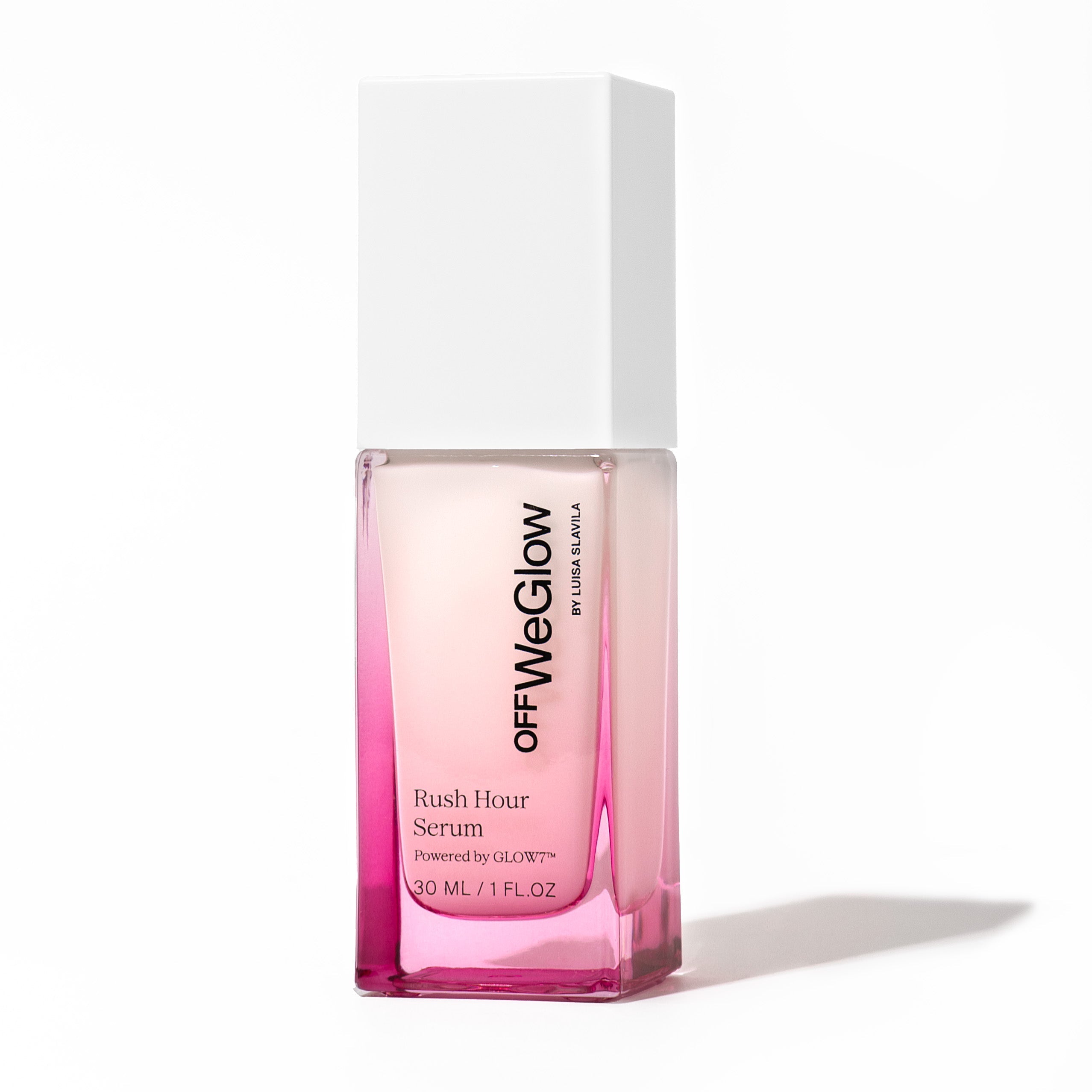
If you want to simplify your routine once your skin has settled, Off We Glow's Rush Hour Serum combines Niacinamide, Saccharide Isomerate, PEACHCALM™, and SYRICALM™ in one step. Introduce it gradually rather than during an active burning episode, and stop using it if your skin develops persistent stinging, redness, or burning.
Dermatologist Tip: When replacing a moisturizer that irritated your skin, look for a straightforward, fragrance-free formula suited to your skin type rather than immediately adding several new active ingredients. Our guide to the best face moisturizers for sensitive skin explains what to consider when choosing a gentler option.
Irritation or Allergic Reaction? When to See a Dermatologist
Irritation and allergic contact dermatitis can sometimes look similar, but there are a few patterns that may offer clues. Irritation often causes burning, stinging, dryness, or redness soon after a product is applied. Allergic contact dermatitis may be more likely to cause itching, redness, swelling, or a rash that develops several hours or even days after exposure.
However, symptoms can overlap, so timing alone cannot reliably tell you which type of reaction you are experiencing. Stop using the suspected product and seek medical advice if the symptoms persist, worsen, repeatedly return, or include significant redness, swelling, blistering, rash, or pain. A dermatologist may recommend formal patch testing when allergic contact dermatitis is suspected.
Seek prompt medical attention if you develop significant swelling around the eyes or face. Seek emergency care immediately if you have difficulty breathing or develop swelling of the lips, tongue, or throat.
FAQs About Why Your Moisturizer Burns
Here are answers to some common questions about why moisturizer may sting or burn your face.
-
Should I keep using a moisturizer that burns?
No. You should not continue using a moisturizer that causes significant, persistent, or worsening burning. Rinse it off gently and stop using it while you assess the reaction. If even simple, fragrance-free products continue to cause discomfort, a dermatologist can help determine whether barrier irritation, contact dermatitis, or another skin condition is responsible.
-
Why does even water sting my face?
Water can sting when the skin is very dry, cracked, inflamed, or significantly irritated. Conditions such as Eczema, Rosacea, contact dermatitis, or an impaired skin barrier can also make normally harmless contact feel uncomfortable. Use lukewarm water, avoid rubbing or scrubbing, and seek medical advice if the stinging persists or is accompanied by significant redness, rash, or swelling.
-
Can a product I've used for years suddenly irritate my skin?
Yes. A moisturizer you have tolerated for years can suddenly become uncomfortable if your skin becomes irritated from Active Ingredients, over-exfoliation, weather exposure, illness, or an underlying skin condition. It is also possible to develop an allergy after repeated exposure to an ingredient. In some cases, the product itself may have been reformulated.
-
Does pH cause stinging?
It can contribute, but pH is only one part of the picture. A product's acidity or alkalinity, ingredient concentration, overall formulation, and the condition of your skin barrier can all affect whether it stings. Stinging alone cannot tell you whether a moisturizer has an unsuitable pH.
-
How long does it take for skin to stop stinging?
The timeline depends on what caused the irritation and how severely the skin has been affected. Mild irritation may begin improving within several hours to a few days after the trigger is removed, while a more significantly irritated skin barrier may take longer to feel comfortable again. Avoid rushing back into your usual active skincare routine. If the stinging is not improving, becomes more intense, or repeatedly returns, speak with a dermatologist.
Did You Know?
"Fragrance-free" and "unscented" do not necessarily mean the same thing. An unscented product may still contain ingredients that help mask the natural smell of the formulation, while a fragrance-free product is generally formulated without added fragrance. If your skin reacts easily, checking the full ingredient list can be more useful than relying on the wording on the front of the package.
Takeaways
If you are wondering why your moisturizer burns, the answer is often related to the condition of your skin rather than the moisturizer alone. Dryness, a disrupted skin barrier, over-exfoliation, strong Active Ingredients, environmental exposure, contact dermatitis, and sensitivity to certain ingredients can all turn a normally comfortable skincare step into an unpleasant one.
Do not try to push through significant burning. Rinse the product off, pause unnecessary irritants, and keep your skincare routine simple while your skin recovers. Once the stinging has settled, reintroduce products gradually so you can identify what your skin tolerates.
Most importantly, pay attention to persistent or worsening symptoms. If moisturizer continues to burn your face despite simplifying your routine, or the reaction is accompanied by a significant rash, pain, or swelling, a dermatologist can help identify the cause and guide you toward a routine that feels comfortable again.
About the Author
Dr Shamsa Kanwal is a dermatologist who partners with Off We Glow to help ensure its formulas are supported by sound, evidence-based skincare principles. She focuses on making skin barrier health, hydration, and realistic skincare routines easier for people to understand.
References
1. PubMed Central — National Library of Medicine
3. Journal of Cosmetic Dermatology — Wiley
7. The Journal of Dermatology — Wiley
9. MDPI — International Journal of Environmental Research and Public Health