Glass Skin 2.0: Why a Natural, Lit-From-Within Glow Starts With Your Barrier, Not Another Highlighter


Written by Dr Shamsa Kanwal - Dermatologist
Updated on August 18th 2026
Want that lit-from-within glow without covering your skin in highlighter or layering product after product? Glass Skin 2.0 moves away from the intensely wet, almost reflective finish that once defined the trend. Instead, it focuses on skin that looks naturally radiant, hydrated, smooth, and comfortable enough to feel confident wearing with minimal makeup or none at all.
If you are chasing that fresh, luminous look, adding another illuminating product may not always be the answer. When skin looks dry, rough, uneven, or uncomfortable, piling on more layers may make your routine feel heavier without addressing what is affecting your complexion underneath. A well-planned natural glow skin routine focuses on supporting hydration, maintaining skin comfort, and choosing lightweight products that work well together.
In this article, we will explore what contributes to a natural, lit-from-within glow, how hydration and the skin barrier influence radiance, and how to build a simple, makeup-compatible routine without relying on heavy layers.
 Hydration
 Soothing
 Radiance
 Clarity
Key Highlights
-
Glass Skin 2.0 focuses on natural radiance rather than surface shine, with hydration, smooth texture, and even-looking tone all contributing to a lit-from-within glow.
-
A supported skin barrier helps maintain hydration and skin comfort, creating a smoother, more supple-looking foundation for natural radiance.
-
More skincare layers do not necessarily mean more glow. Excessive or poorly matched products can feel heavy and may contribute to pilling under makeup.
-
A focused routine with lightweight, complementary formulas can support a fresh, dewy finish while keeping skincare simple and makeup compatible.
What Does Glass Skin 2.0 Really Look Like?
Remember when “glass skin” became the beauty goal and suddenly a 10-step Korean-inspired skincare routine seemed like the price of admission? Layer after layer of toner, essence, serum, moisturizer, and other products promised an ultra-smooth, almost reflective complexion. But the idea of glass skin has evolved. Glass Skin 2026 is less about creating an intensely wet-looking surface and more about skin that appears naturally hydrated, smooth, fresh, even-looking, and radiant.
If you are after that lit-from-within glow, you do not necessarily need ten products to get there. The goal is to brighten up your skin in a way that still looks natural and comfortable, whether you are wearing makeup or going without it. Rather than relying entirely on highlighter or illuminating products, focus on giving your skin the hydration and everyday support it needs to look healthy and luminous on its own.
Glow vs. Shine: What Is the Difference?
They may look similar at first glance, but glow and shine are not quite the same. Shine is largely created by light reflecting from the surface of your skin [1]. A highlighter, facial oil, or illuminating product can produce that reflective effect almost immediately. Natural-looking radiance, however, is more complex because the appearance of skin is influenced by the way light interacts with both its surface and underlying layers.
What Actually Makes Skin Look Radiant?
Natural-looking radiance depends on more than simply making the skin shiny. Hydration, surface smoothness, skin texture, and an even-looking tone can all influence how light interacts with your complexion. Research into facial skin radiance suggests that both surface and subsurface reflections contribute to how radiant the skin appears [2].
This helps explain why adding another glossy or illuminating layer does not necessarily create the healthy-looking glow you are after. If the skin underneath appears dry, rough, or uneven, additional highlighter may simply make the surface more reflective without improving the overall appearance of radiance. A more natural, lit-from-within glow comes from creating a complexion that looks hydrated, smooth, comfortable, and luminous rather than simply shiny.
How Does Your Skin Barrier Support a Natural Glow?
Your skin barrier plays an important role in keeping your complexion hydrated, comfortable, and smooth-looking. Its outermost layer, known as the stratum corneum, helps regulate water loss and maintain hydration within the skin [3]. When your skin is adequately hydrated, it can appear softer, smoother, and more supple, all of which contribute to the fresh appearance associated with a lit-from-within glow.
Moisturization can also influence the way skin looks beyond simply making it feel softer. Research has found that moisturizing the skin can alter its optical properties, including how light is scattered and reflected from the skin’s surface [4]. This helps explain why well-hydrated skin may appear more luminous and smooth.
However, supporting the skin barrier alone does not automatically create glass skin. Radiance is influenced by several factors, including hydration, skin texture, pigmentation, age, environmental exposure, and your individual skin characteristics. Still, if you are building a natural glow skin routine, supporting hydration and skin comfort provides a more useful foundation than simply adding another product designed to create surface shine.
Why Can Your Skin Still Look Dull When You Use Glow Products?
You may already have a brightening serum, illuminating moisturizer, glow drops, and highlighter sitting on your shelf, yet your complexion can still look dull or uneven. That is because dull-looking skin is not always something another glow-enhancing product can solve. Dryness, dehydration, rough or uneven texture, uneven-looking skin tone, environmental exposure, and irritation can all influence how radiant your complexion appears.
The condition of the skin underneath your makeup also matters. If your skin feels dry, uncomfortable, or rough, adding more reflective products may increase surface shine without creating the smoother, healthier-looking radiance you want. Product buildup and a complicated routine can also make the skin feel heavy or interfere with the fresh, seamless finish associated with Glass Skin 2.0.
This is where it can help to look at your routine as a whole. If you keep adding products because your skin does not look radiant enough, you may end up with more layers without addressing what your complexion actually needs. Sometimes the answer is not another illuminating step. A more intentional routine that focuses on hydration, skin comfort, and compatible formulas may do more to support a naturally luminous appearance.
What If Glow Products Make Your Skin Sting or Look Red?
Not every complexion responds well to glow products. If your skin is sensitive or reactive, the same brightening serums, acids, and illuminating drops that promise radiance can leave your face feeling tight, warm, or uncomfortable. Redness and visible irritation can also make the skin look uneven, which works against the smooth, fresh appearance you are trying to create.
This is where the usual glow advice tends to fall short. Adding more actives to a complexion that already feels uncomfortable can make the situation harder to manage rather than easier. If your skin reacts easily, it helps to slow down and pay attention to what your skin is telling you.
A few things worth checking:
-
Fragrance, including natural fragrance and essential oils, is one of the more common causes of irritation in cosmetic products.
-
Strong exfoliating acids and retinoids used alongside brightening products can leave sensitive skin feeling uncomfortable.
-
Introducing several new products at once makes it difficult to identify which formula your skin is reacting to.
-
Patch testing a new product before applying it to your whole face can help you catch problems early.
For reactive skin, comfort usually needs to come before radiance. Skin that looks calm and even tends to look more luminous than skin that is flushed or irritated, no matter how many glow products sit on top of it.
Why Does Skincare Pill Under Makeup?
Your morning routine might start with a cleanser, followed by toner, essence, a hydrating serum, a brightening serum, moisturizer, facial oil, sunscreen, and finally a glow-enhancing product before foundation. Each step may have a purpose on its own, but together they can create a long stack of formulas sitting on the skin. For some people, this layering works well. For others, especially when several products have overlapping purposes, it can make the routine feel unnecessarily heavy.
Another common frustration is pilling. If you have ever carefully applied your skincare only to notice small flakes, crumbs, or rolls forming when you apply foundation, you have experienced it. Pilling does not necessarily mean that a product is ineffective. It can happen when too much product is applied, several layers are used together, formulas have incompatible textures, or one layer has not had enough time to settle before the next is applied.
If you are looking for a serum that doesn’t pill under makeup, pay attention to more than the serum itself. The total number of skincare layers, the amount of each product you use, application order, formula texture, and how well the products layer together can all influence the final result. A lightweight, well-formulated serum that fits comfortably between cleansing and moisturizing can help keep your routine more makeup-friendly without sacrificing the hydration and radiance you want.
How Can You Build a Natural Glow Routine Without Heavy Layers?
A natural glow skin routine does not need multiple brightening serums, glow drops, facial oils, and illuminating moisturizers layered on top of one another. If your routine already feels crowded, adding another glow product may leave your skin feeling heavier without necessarily improving the fresh, dewy finish you want. Instead, focus on hydration, comfortable textures, complementary ingredients, and products that layer well together.
Start With Hydration
When skin looks dry or dehydrated, adding a reflective product may increase surface shine without making the complexion look smoother or more comfortable. Well hydrated skin often appears softer, more supple, and naturally luminous, which makes hydration an important foundation for a lit-from-within glow.
Choose products that help maintain moisture rather than relying entirely on formulas designed to create an immediate glossy effect. Saccharide Isomerate, for example, is a moisture binding ingredient commonly used in hydrating skincare formulations. Squalane is an emollient that can help soften the skin and support a smooth, comfortable, moisturized finish. Ingredients like these can contribute to the hydrated appearance that makes skin look naturally fresh rather than simply shiny.
Keep Your Routine Focused
Take a look at the products on your shelf and ask one simple question: What is each product actually contributing to my routine? If you are using three different serums for hydration, two products for radiance, and another formula that performs a similar role to your moisturizer, there may be more overlap than you realize.
This does not mean you need to discard products that work well for your skin. Instead, identify your main skincare priorities and choose products that serve a clear purpose. A more focused routine can also make it easier to understand how your skin responds to individual products and identify which formulas are genuinely contributing to hydration, comfort, and radiance.
Choose Complementary Ingredients
If your skin looks dry, stressed, or uncomfortable, adding more illuminating products may not create the healthy looking finish you are trying to achieve. Ingredients such as PEACHCALM™ and SYRICALM® can be included in formulations designed to help support a calm, comfortable looking complexion.
The goal is not to search for every beneficial ingredient in a separate product. Instead, look for thoughtfully formulated products that combine complementary ingredients and fit comfortably into the rest of your routine. This approach can help you target several cosmetic concerns without creating an unnecessarily complicated stack of products on the skin.
Give Each Layer Time to Set
Your skincare routine should work with your makeup rather than against it. If your skin looks smooth immediately after applying skincare but begins to roll, flake, or separate when foundation goes on, it may be worth reconsidering how many layers you are using and how quickly you are applying them.
A lightweight serum that spreads easily and layers comfortably can be more practical than several separate formulas competing underneath moisturizer, sunscreen, and makeup. Apply reasonable amounts of each product and allow each layer a little time to settle before moving to the next step. Avoid adding extra products simply because they promise additional glow, especially if your skin already feels adequately hydrated and comfortable.
Support Your Skin Barrier
A consistent routine that supports hydration and skin comfort can provide a better foundation for natural looking radiance. Your skin does not need to appear glossy to look healthy and luminous. When the complexion looks well hydrated, smooth, and comfortable, you may find that you need less highlighter or fewer illuminating products to create the finish you want.
Keep the essentials consistent. Cleanse gently, moisturize according to your skin’s needs, and use a broad spectrum SPF 50+ sunscreen during the day. If your skin becomes easily overwhelmed, avoid turning your glow routine into another opportunity to layer several strong or unnecessary active ingredients. Instead, choose products that work comfortably together, particularly if your skin is sensitive or prone to irritation.
What Order Should You Apply Your Morning Glow Routine?
If you are unsure where each product belongs, a simple rule helps: thinnest textures first, heaviest last. A straightforward morning routine for a natural glow looks like this:
-
Gentle cleanser. Use lukewarm water and avoid anything that leaves your skin feeling tight afterwards.
-
Lightweight serum. Apply to clean skin and give it around 30 seconds to settle.
-
Moisturizer. Use as much or as little as your skin needs that day.
-
Broad spectrum SPF 50+. Wait a minute or two before makeup so it has time to set.
-
Makeup, if you are wearing it. Start with less than you think you need, since well hydrated skin often requires less coverage.
Highlighter, if you use it, goes on last as a finishing touch rather than as the source of your glow.
Choose Lightweight, Makeup Friendly Formulas
When your goal is a natural, makeup compatible glow, product texture matters alongside the ingredients in the formula. A serum may contain ingredients that suit your skincare goals, but if it feels heavy, sticky, or leaves excessive residue on the skin, it may be more difficult to layer comfortably in a morning routine.
A lightweight serum can provide a focused skincare step without creating a thick buildup of products underneath makeup. This can be particularly useful when your morning routine already includes moisturizer and sunscreen before foundation. Choosing formulas that spread easily and sit comfortably together can help create the smoother, fresher finish associated with Glass Skin 2.0.
What Should You Prioritize for a Natural, Lit-From-Within Glow?
If you are wondering what your skin actually needs for a naturally radiant finish, focus on the essentials rather than adding more layers. Hydration, skin comfort, radiance support, moisture balance, and lightweight formulas can all help create a smoother, fresher-looking complexion without making your routine feel heavy. The breakdown below shows what to look for and why each element matters for glow.
Can One Lightweight Serum Simplify Your Glow Routine?
If you are using one serum for hydration, another for radiance, and a third for overall skin comfort, your routine can quickly become more complicated than it needs to be. Layering several products is not automatically harmful, but overlapping formulas can add unnecessary steps, create a heavier feel on the skin, and make it more difficult to identify which products are actually contributing to your results. One way to simplify your natural glow skin routine is to choose a well-formulated serum that brings complementary ingredients together in a single step.
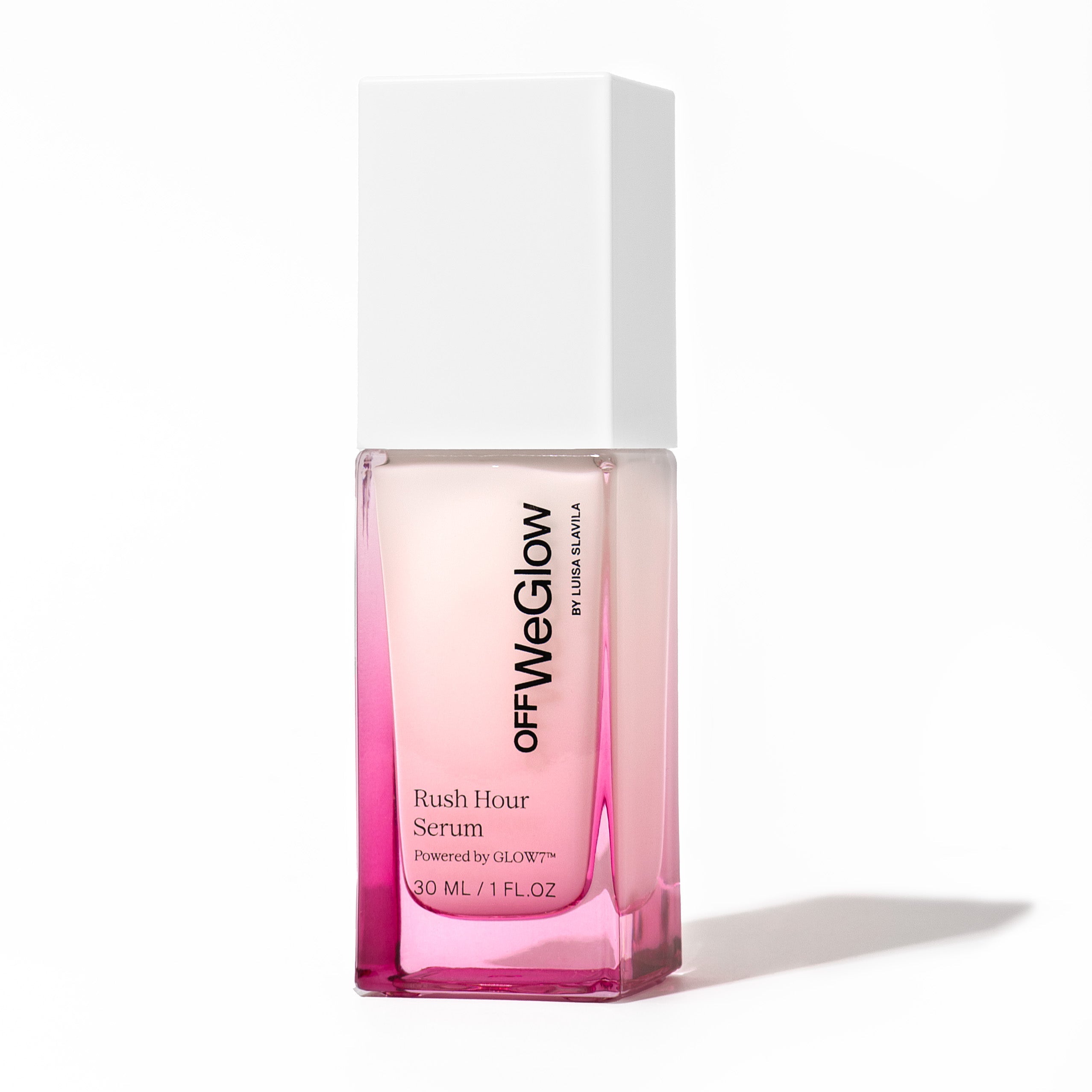
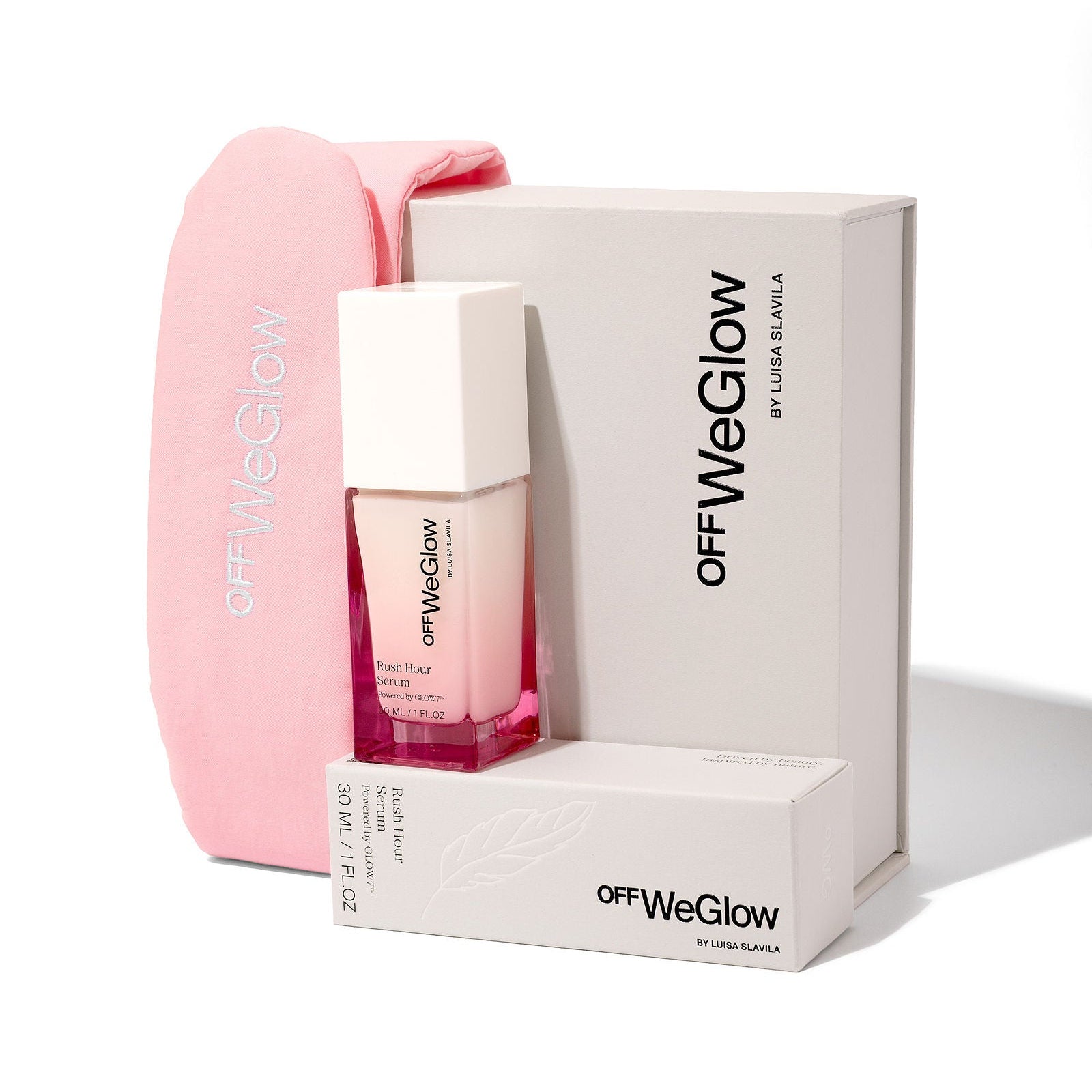
Rush Hour Serum follows this approach with its GLOW7™ formula, which brings together seven complementary ingredients: Niacinamide, BV-OSC (Tetrahexyldecyl Ascorbate), Saccharide Isomerate, PEACHCALM™, SYRICALM®, UNYSOOTH™, and SEPIBLISS™ FEEL. Together, these ingredients are designed to support hydration, skin comfort, and a healthy-looking, radiant complexion. Rather than building your glow routine around several separate serums with overlapping purposes, one lightweight serum can serve as a focused skincare step while allowing the rest of your routine to remain simple and makeup friendly. Individual results may vary.
FAQs About Building a Natural Glow Skin Routine for Glass Skin 2.0
Here are a few of the most commonly asked questions about building a natural glow skin routine:
-
Do I really need a 10-step Korean skincare routine to get glass skin?
No. The Korean beauty routines that helped popularize the glass-skin trend often involve several layers, but there is no required number of skincare steps for achieving a healthy-looking glow. The right routine depends on your skin type, concerns, and how well your skin tolerates the products you use.
For many people, a consistent routine built around gentle cleansing, adequate hydration, daily sun protection, and one targeted serum step can be enough to support smoother, more radiant-looking skin. Adding extra products only makes sense when they serve a clear purpose and work comfortably with the rest of your routine.
-
Why does my makeup pill after I apply skincare?
Pilling occurs when skincare or makeup forms small flakes, crumbs, or rolls on the surface instead of creating a smooth layer. It can happen when too much product is applied, several formulas are layered together, textures do not interact well, or one product has not had enough time to settle before the next is applied.
If pilling happens frequently, consider simplifying the number of layers in your morning routine and using smaller amounts of each product. Allowing each layer to settle before applying the next may also help. Choosing lightweight formulas that layer comfortably beneath moisturizer, sunscreen, and foundation can make your routine more makeup compatible.
-
Why does my skin look shiny but not glowy?
Surface shine and natural-looking radiance are not quite the same. Highlighter, facial oils, and illuminating products can make the skin look more reflective, but that reflective finish does not necessarily mean the complexion will look smooth, hydrated, or healthy.
A lit-from-within glow is influenced by several factors, including hydration, surface smoothness, skin texture, and even-looking tone. If your skin is dry, rough, or uncomfortable underneath a glossy product, adding more shine may simply make the surface more reflective rather than creating the naturally luminous finish associated with Glass Skin 2.0.
-
Can I get the glass-skin look without highlighter?
Yes. Highlighter can enhance surface radiance, but it is not essential for creating a naturally luminous-looking complexion. Supporting hydration, maintaining skin comfort, and choosing products that help your complexion look smooth and fresh can create a more subtle glow that works with minimal makeup or none at all.
If you enjoy wearing highlighter, you can still use it as an optional finishing step. The difference is that it enhances the radiance already visible in your complexion rather than being responsible for creating the entire glow.
Did You Know?
Your skin’s hydration level can change throughout the day. Factors such as humidity, temperature, air conditioning, cleansing habits, and environmental exposure can all influence how much water the outermost layer of your skin retains. This is one reason your complexion may look fresh and plump at one point in the day but feel drier or less radiant several hours later.
Takeaways
Glass Skin 2.0 is about a natural, lit-from-within glow rather than surface shine from highlighter or heavy product layers. Hydration, smooth texture, even-looking tone, and a supported skin barrier all contribute to how radiant your complexion appears.
A focused natural glow skin routine with gentle cleansing, hydration, SPF 50+, and lightweight, complementary formulas can help support a fresh, makeup-compatible finish while reducing unnecessary layering and pilling. Rush Hour Serum can simplify the serum step by combining seven GLOW7™ ingredients in one lightweight formula.
References
1. ACM Digital Library — Modeling the Interaction of Light with Skin
2. PubMed — National Library of Medicine